
Educational Technology AI in Modern Classrooms
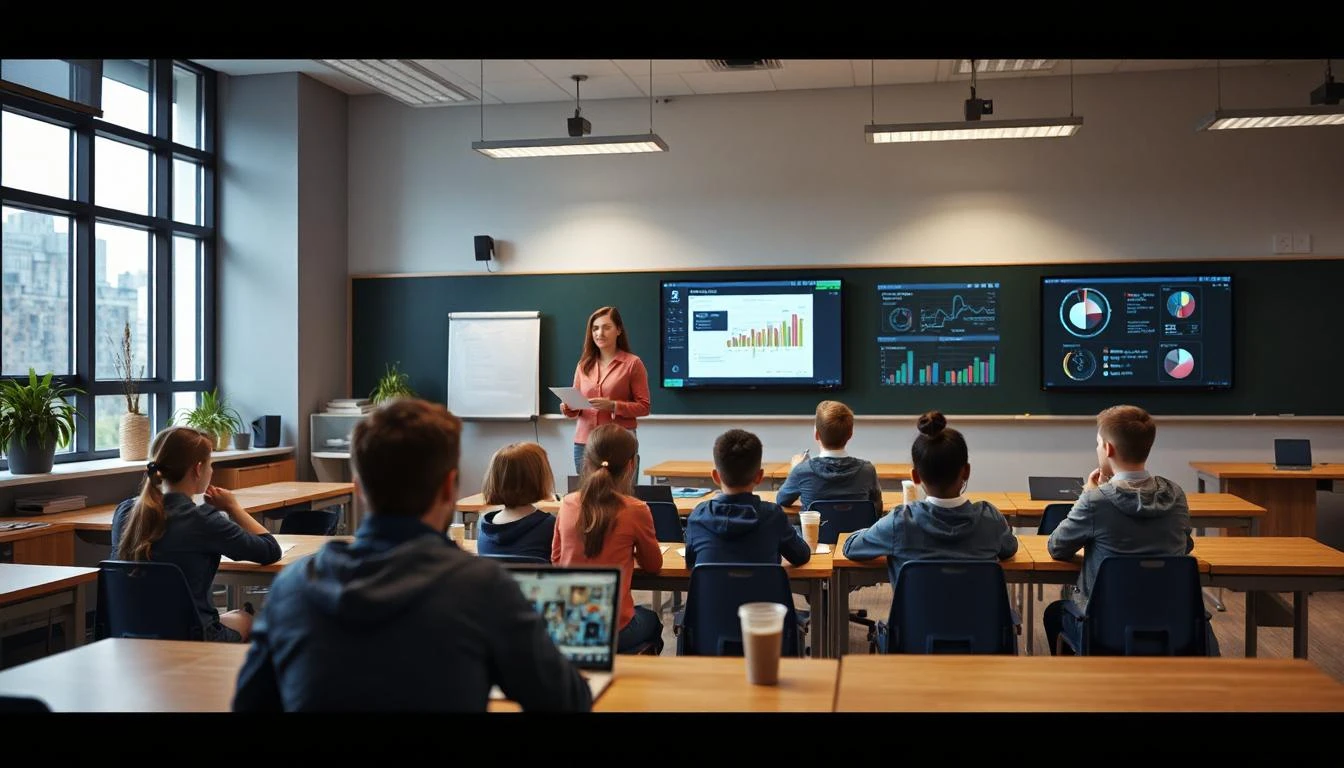
The modern education landscape is shifting faster than most institutions can adapt. Classrooms are no longer static rooms filled with passive listening, they are evolving into intelligent ecosystems where data, interaction, and personalization shape every learning moment. Students today don’t just consume information; they experience it through layered digital environments that respond to their pace, behavior, and curiosity.
In this evolving ecosystem, AI classroom tech has become the invisible engine driving transformation across schools and universities worldwide. It connects learners, teachers, and digital systems into a single adaptive framework where learning is no longer one-size-fits-all but uniquely responsive to each individual’s needs.
Transformation of Modern Classrooms
Education is undergoing a structural reinvention, where physical and digital boundaries begin to blur. Classrooms are becoming interactive hubs that continuously adjust to the learner’s cognitive rhythm and engagement patterns.
The global rise of edtech 2026 is accelerating this transformation, pushing institutions to adopt smarter systems that blend traditional teaching with intelligent automation. This shift is not cosmetic, it fundamentally changes how knowledge is delivered and absorbed.
AI classroom tech is now redefining how lessons are designed, delivered, and optimized in real time. Instead of static syllabi, educators can rely on dynamic systems that adapt content based on student performance, attention span, and comprehension levels.
Integration of smart devices in schools
Smart devices are now deeply embedded in learning environments, from AI-powered tablets to biometric attendance systems. These tools collect and analyze learning data continuously, helping teachers adjust instruction instantly. Concepts like smart learning systems, connected classrooms, and digital education ecosystems are becoming standard across progressive institutions.
Virtual and augmented learning environments
Immersive technologies are reshaping how students interact with abstract concepts. Virtual field trips, AR-based simulations, and 3D scientific modeling are turning passive learning into experiential discovery. According to education researcher Dr. Helen Morris, “Immersive learning bridges the gap between imagination and comprehension in ways traditional methods never could.”
Digital whiteboards and interactive systems
Modern classrooms now rely on interactive panels that respond to touch, voice, and cloud-based collaboration. These systems support real-time annotation, remote participation, and intelligent content suggestions, making classroom engagement more fluid and multidimensional.
AI Applications in Education Systems
The backbone of today’s education revolution lies in intelligent automation and predictive analytics. Schools are no longer just teaching institutions, they are becoming data-driven learning ecosystems.
Personalization, efficiency, and scalability define the new era of digital education, where AI classroom tech plays a central role in reshaping both teaching methodologies and student experiences.
Personalized learning algorithms
Adaptive learning systems analyze each student’s strengths and weaknesses to deliver tailored content. These systems use behavioral tracking, performance history, and cognitive modeling to optimize learning paths. Long-tail queries such as how AI classroom tech improves personalized education outcomes in modern schools reflect growing global interest in this shift.
Automated attendance and grading systems
Administrative processes are increasingly automated through AI-powered systems that handle grading, attendance tracking, and academic reporting. This reduces teacher workload significantly while improving accuracy and fairness in evaluation.
Student performance tracking tools
Modern analytics dashboards allow educators to monitor student progress in real time. These systems identify learning gaps early and suggest targeted interventions. As noted by Professor Daniel Harper, “Data-driven education ensures that no student is left invisible in the learning process.”
Benefits of EdTech for Teachers and Students
The integration of intelligent education systems is reshaping the experience for both educators and learners. The classroom is no longer a one-directional space but a collaborative, evolving environment.
With the advancement of AI classroom tech, teaching becomes more strategic, while learning becomes more personalized and engaging.
Improved engagement and participation
Interactive quizzes, gamification, and real-time feedback loops significantly enhance student involvement. Learning becomes more dynamic, encouraging curiosity and active participation rather than passive memorization.
Enhanced teaching efficiency
Teachers benefit from automation that handles repetitive tasks such as grading and reporting. This allows more time for mentorship, creativity, and personalized instruction.
Data driven decision making
Educational decisions are now supported by predictive analytics and behavioral insights. This ensures interventions are timely and more effective, improving overall academic outcomes.
Join the Future of AI Powered Education Revolution
Education is no longer confined to traditional frameworks, it is evolving into an adaptive intelligence system where every interaction contributes to continuous improvement. The rise of AI classroom tech is not just enhancing education; it is redefining what learning means in the modern world.
As institutions continue adopting edtech 2026, the gap between traditional and intelligent education systems will widen rapidly, rewarding those who adapt early and efficiently.
The real question is no longer whether technology belongs in education, but how deeply it should be integrated to unlock human potential at scale. The future classroom is already here, it is just unevenly distributed.
A final reflection from educator Dr. Samuel Whitmore captures this shift clearly: “The classroom of tomorrow is not a place, it is a connected intelligence network that evolves with every learner interaction.”
Now is the moment to rethink learning, explore innovation, and step into a system where education becomes truly adaptive.